
How it works.
A few simple steps. Two minutes of your time. One result: a lower tax bill.
Your part
about two minutes, total
Enter your address
See your estimated savings and a real comparable-sales read in seconds. No account needed yet.

Sign up and e-sign
Confirm your details and sign the authorization. That is the last thing we ask of you.
Our part
you do nothing else
We handle the whole thing
We build your evidence, file with the county, and represent you at every hearing, start to finish.

You enjoy the savings
Your bill drops. We send our invoice only after we win, for 20% of what we saved you. No win, no charge.
Watch it happen.
The exact screens you will see, from the first search to your portal. A ghost cursor walks through a real signup.


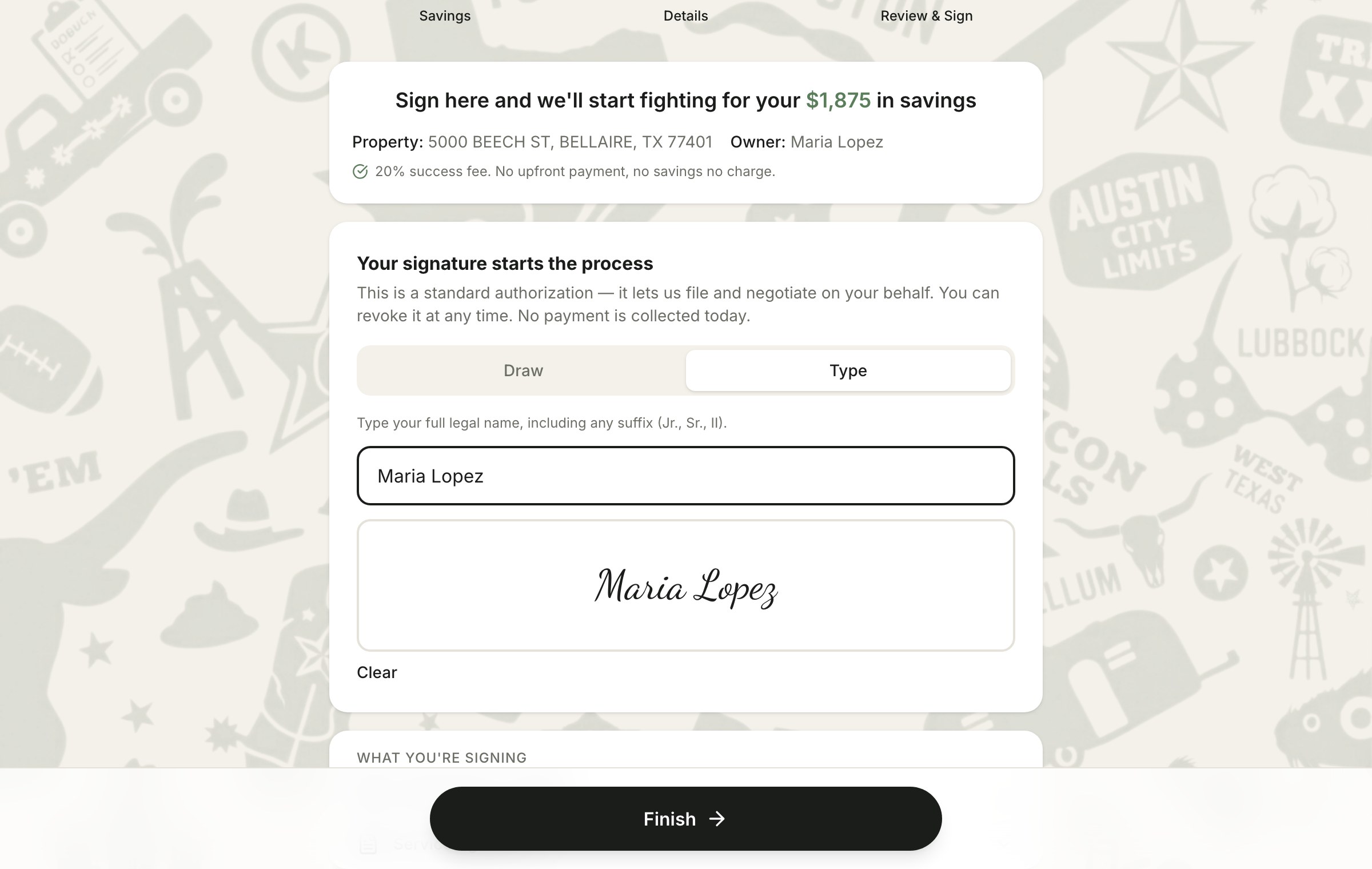
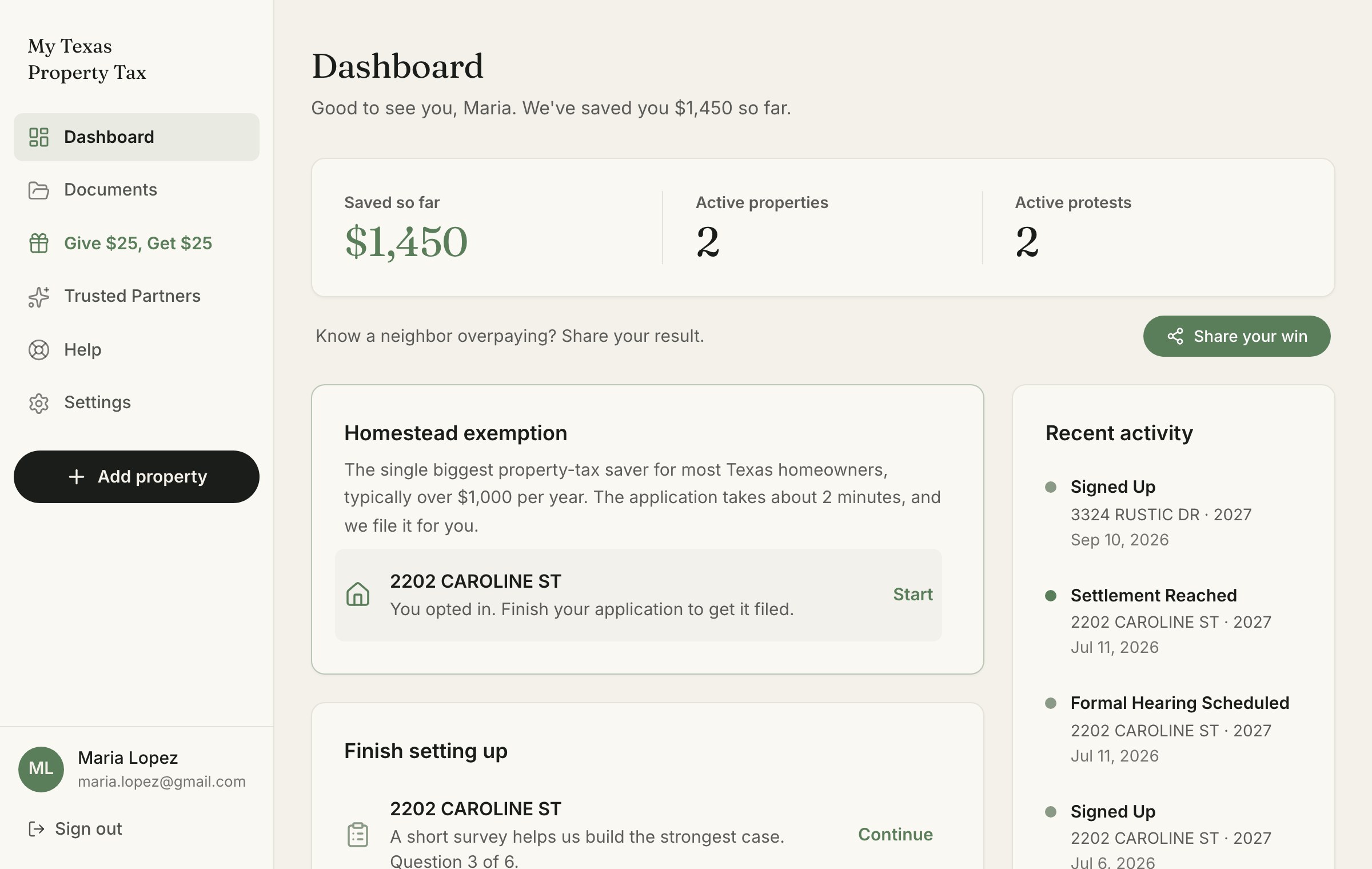
What we actually do.
The moment you e-sign, the work shifts entirely to us. Here is the exact process we run for your property, start to finish.
We analyze your property
We pull real comparable sales and run AI and regression models to pinpoint exactly where you are overassessed.
We file your protest
We prepare your evidence packet and submit it to the county appraisal district, correctly and before the deadline.
We negotiate informally
We make your case directly to the district first, settling for a lower value without a hearing whenever we can.
We represent you at the hearing
If a formal hearing will win more, we argue your case before the ARB panel. You never have to appear.
We lock in your reduction
Your assessed value drops and your tax bill shrinks. Only then do we send an invoice, for 20% of the savings.
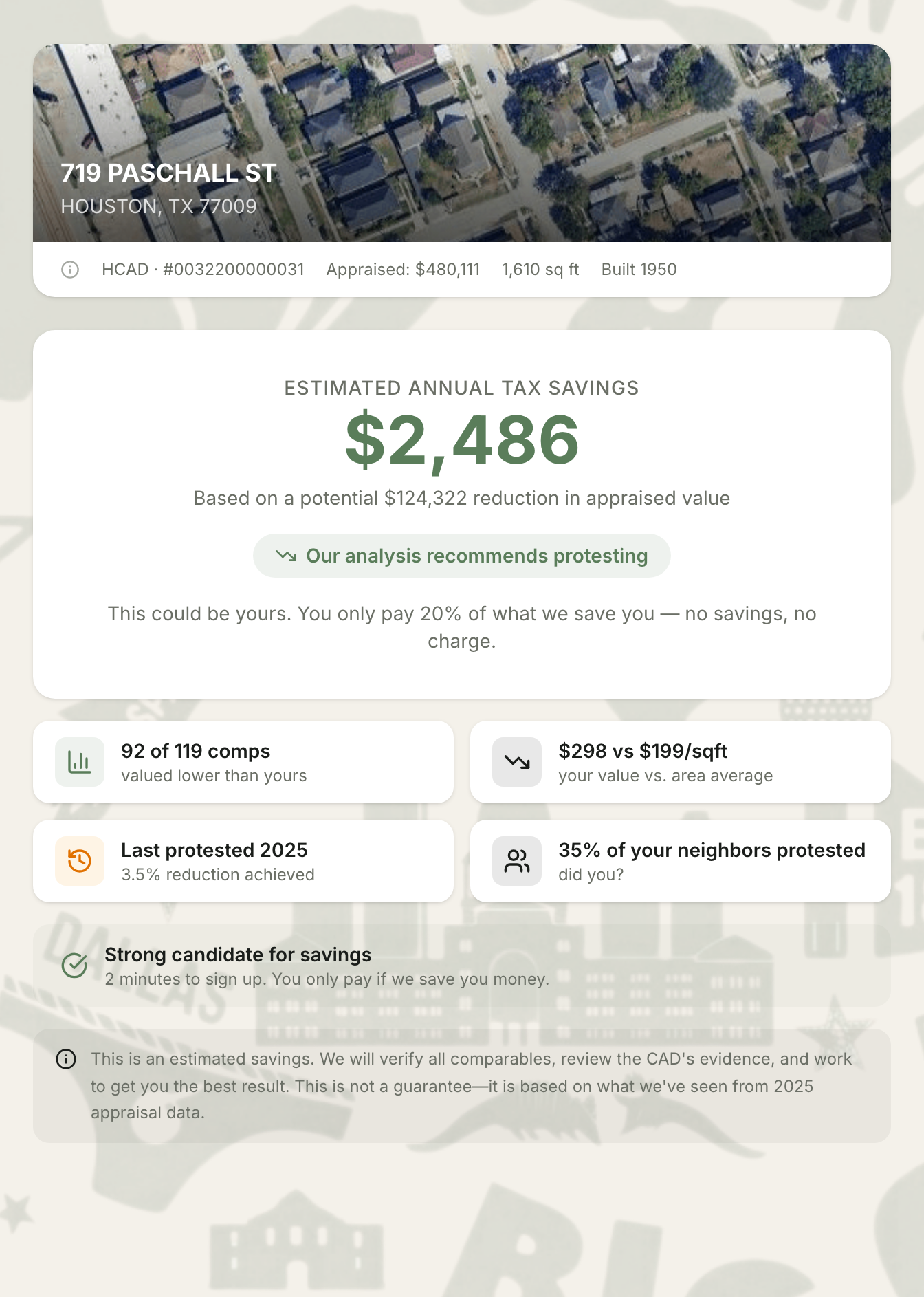
The analysis behind step one, for a real Houston home.
Why protest your property taxes?
Texas has no state income tax, so property taxes fund nearly everything local. Assessments tend to run high, which makes protesting not just common but expected.
~50%
of Texas homeowners who protest get a reduction
$1,200+
average annual savings for Houston homeowners
$0
risk to you, since a protest can never raise your value
Key deadlines.
The Texas property tax calendar runs on a strict schedule. Missing a date means missing a year of savings, so we track them for you.
January 1
Valuation date
The appraisal district values your property as of this date each year.
April 15 to May 15
Notice of appraised value
You receive your notice showing the new appraised value.
May 15
Protest deadline
File by May 15, or within 30 days of your notice, whichever is later. This is the date that matters most, and the one we never miss.
May to September
Hearings
Informal hearing with the appraisal district, then a formal ARB hearing if needed.
October to January
Tax bills and payment
Bills mailed in October, due January 31. Your reduced value shows up on the final bill.
Common questions.
No. Texas law prohibits the appraisal district from raising your value as a result of a protest. The worst outcome is that your value stays the same.
You can still protest. Your purchase price is one data point, but it doesn't lock in your assessed value. We find reductions even for recent buyers.
No. We handle everything on your behalf, both informal negotiations and formal ARB hearings. You never need to appear in person.
Only after we win. You pay 20% of what we save you, and nothing at all if we don't lower your bill.
We serve the Houston, Austin, and Dallas metros: Harris, Fort Bend, Montgomery, Brazoria, Galveston, Travis, Williamson, Dallas, and Collin counties.
Yes. Commercial properties receive personalized service from our team. Visit our commercial page to submit an inquiry.
Ready to lower your
property taxes?
It takes 2 minutes to sign up. We take it from there.